Radon Mitigation Help in York, PA
If you have a radon test result and aren't sure what to do next, you shouldn't have to sort through conflicting claims to figure it out.
York Radon Help connects homeowners with an appropriate Pennsylvania-certified participating provider. The site is managed by HomePros Team — we review and manage the request, while participating providers handle testing, mitigation recommendations, pricing, installation, and services you choose to hire.
- Managed by HomePros Team
- PA-certified participating providers
- York City & York County focus
- Start with your test result
When Is Radon Mitigation Recommended?
4.0 pCi/L should not be interpreted as a dividing line between “safe” and “dangerous.” Radon risk exists below the action level as well, and EPA guidance should be used when deciding what your test result means and what to do next.
Review the test conditions and follow applicable EPA and Pennsylvania guidance about testing and your home’s circumstances.
Below the EPA action level, but it does not mean there is zero radon risk. EPA guidance should be considered when deciding whether additional testing or reduction measures make sense.
This reaches the EPA action level. Follow authoritative guidance for confirming the result when appropriate and taking action to reduce radon.
Your measured result provides the starting point for deciding what to do next. Regional data and maps can provide context, but they do not replace a properly conducted test of the property.
Sources used in this section: U.S. Environmental Protection Agency · Pennsylvania Department of Environmental Protection.
A Radon Map Cannot Tell You Your Home's Radon Level
What a Map Can Tell You
- That radon is a potential concern within a geographic area.
What a Map Cannot Tell You
- your home’s actual radon concentration
- whether your home is above or below 4.0 pCi/L
- whether your neighbor’s result applies to your property
- whether a particular foundation automatically means high or low radon
- whether your home needs mitigation
Use maps for regional context, not as a prediction of what a particular house will test.
Sources used in this section: U.S. Environmental Protection Agency · Pennsylvania Department of Environmental Protection.
York City and York County Homes Are Not the Same Housing Market
| Housing metric | York City | York County |
|---|---|---|
| Median year built | ~1941 | ~1976 |
| Built before 1940 | ~49.3% | ~18.3% |
| Built before 1980 | ~85.7% | ~54.8% |
The differences matter because the physical characteristics of a home can affect how a mitigation contractor approaches the project.
Depending on the property, relevant considerations may include foundation layout, accessibility, renovation history, finished areas, available system-routing paths, and other construction details.
But housing age should not be confused with radon concentration. An older home is not automatically a higher-radon home; age is relevant to potential installation complexity, not a prediction of the test result.
Sources used in this section: U.S. Census Bureau / American Community Survey. See Sources & Methodology for geographic definitions, source periods, and calculation notes.
How Radon Mitigation Systems Reduce Indoor Radon
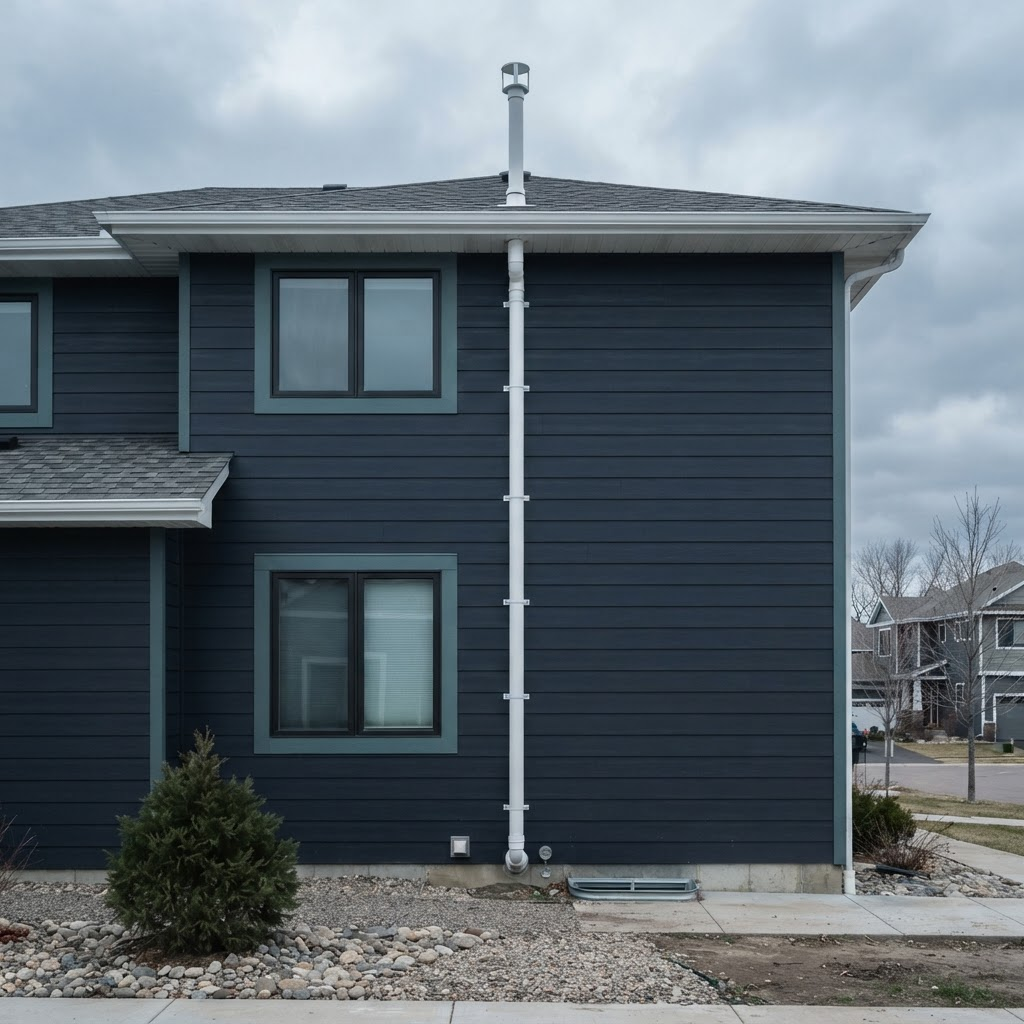
The exact design depends on the property. One of the most common approaches involves soil depressurization, which creates suction beneath the home and directs radon-containing soil gas outside before it can accumulate indoors.
A Typical System May Include
A suction point
An opening or connection is established to create suction beneath an appropriate portion of the structure.
Piping
Pipe carries soil gas away from beneath the building.
A radon fan
A purpose-designed fan creates the pressure difference needed for the system.
A discharge route
The system vents radon-containing gas outdoors at an appropriate location.
Supporting sealing work
Certain openings may be sealed as part of supporting system performance, depending on the property and design.
Crawlspace approaches where applicable
Properties with crawlspaces may require a membrane or other system design suited to those conditions.
Post-installation measurement
The home’s radon level should be measured after mitigation to determine system performance.
Simple System Concept
The exact number of suction points, pipe route, fan selection, crawlspace treatment, and other design decisions should be based on the individual property rather than a generic installation plan.
See how radon mitigation systems work.
Sources used in this section: U.S. Environmental Protection Agency · Pennsylvania Department of Environmental Protection
What Affects Radon Mitigation Cost in York?
You may see specific dollar ranges published online, but a quoted range is not necessarily the same thing as a representative study of actual York-area mitigation projects. We would rather explain the variables than present an unsupported local average as fact.
The cost of a radon mitigation project can depend on factors such as:
Compare the Scope, Not Just the Price
When reviewing estimates, the most useful comparison is not simply which contractor has the lowest total.
Compare the proposed system design and scope — not just the total price.
Ask what system is being proposed, why that design fits the property, what work is included, how post-installation performance will be checked, and whether the estimates you are comparing actually cover equivalent work.
See the factors that can affect radon mitigation cost in York.
Verify a Pennsylvania-Certified Radon Mitigator
Don’t rely only on a website badge or a contractor saying they are “certified.” Use current Pennsylvania records as part of your contractor-verification process.
Before Hiring a Radon Mitigator
- 1
Verify the provider in current PA DEP records
Confirm the individual and/or firm as appropriate using current Pennsylvania information.
- 2
Confirm certification for the relevant service
Testing and mitigation are different services. Make sure the certification shown applies to the service you need.
- 3
Confirm current status
Do not assume an old certificate, badge, or website statement establishes current certification.
- 4
Review the proposed scope and estimate
Understand the system being proposed, routing, included work, price, and responsibilities before agreeing to installation.
- 5
Understand post-installation testing
Ask how the home’s radon concentration will be measured after installation so system performance can be evaluated.
- 6
Review warranties and service responsibilities
Ask what is covered, for how long, who handles future service, and what responsibilities belong to the provider or homeowner.
Certification verifies applicable credentials or requirements; it should not be interpreted as a PA DEP quality ranking, recommendation, or endorsement of a particular provider.
Learn how to verify a Pennsylvania radon provider.
Sources used in this section: Pennsylvania Department of Environmental Protection
What Do We Actually Know About Radon Levels in York?
But there is an important difference between knowing that radon is a regional concern and claiming that a specific percentage of York homes test above a particular level.
You may encounter precise York-area statistics on contractor websites, directories, AI-generated search results, or other pages. We do not automatically repeat those numbers.
Our Standard for Local Radon Statistics
When York Radon Help publishes a local statistic, we want to be able to show:
- where the underlying data came from
- the geographic area represented
- the date range
- how the figure was calculated
- the number of observations when available
- limitations in the data
- whether the statistic represents York City, York County, a ZIP code, or another geography
Until a figure can be traced and reproduced from appropriate source data, we won’t present it as a verified York statistic.
Understanding York Radon Data
Our York radon levels resource is designed to help homeowners interpret local radon information more carefully.
It explains:
- what EPA radon maps can and cannot tell you
- how Pennsylvania radon data can be used
- why York City and York County must be treated as different geographies
- how local statistics are selected and verified
- why some frequently repeated York statistics are not presented as verified facts
- what sample size, date range, geography, and other data limitations can mean
That context matters because a local average describes a dataset or group of results — not the concentration inside a particular property.
As additional reproducible data becomes available, the resource can be expanded with further York-area analysis while retaining the same sourcing and methodology standards.
Explore York radon levels and methodology · See our Sources & Methodology
Get Help Finding Radon Mitigation in York
- 1
Tell Us About Your Home
Submit your contact information, ZIP Code, and whether you already have a radon test result.
- 2
Share Your Result If You Have One
If you know the measured level in pCi/L, include it with your request. If you don’t have a result yet, just select No or Not Sure.
- 3
HomePros Team Reviews Your Request
We review the information you provide to better understand the type of assistance you’re seeking.
- 4
Connect With an Appropriate Provider
When appropriate, your request may be matched or referred to a participating provider who can discuss testing, mitigation, availability, system options, scope, pricing, and next steps with you.
Start With Your Radon Result
If you have a test result, share it below — but you can also request help if you haven't tested yet. HomePros Team reviews every request and connects you with a certified provider when appropriate.
- Have a result? Share the pCi/L reading if you know it
- Haven't tested yet? You can still request help
- Providers handle testing, design, and follow-up verification
Radon Mitigation FAQs
What radon level requires mitigation?
The EPA action level is 4.0 pCi/L. At or above this level, EPA guidance recommends taking steps to reduce radon. Radon risk also exists below 4.0 pCi/L, so EPA guidance should be used when deciding what your result means and whether reduction measures make sense for your home.
Is 4.0 pCi/L a “safe versus dangerous” line?
No. 4.0 pCi/L is the EPA action level for taking steps to reduce radon, not a boundary between safe and dangerous. Radon risk exists below the action level as well. Treat it as a guidance threshold for deciding when to act, not a guarantee of safety below it.
Can a radon map tell me my home’s radon level?
No. Radon maps describe regional potential, not the concentration in a specific house. Homes in the same area — even neighboring homes — can produce different results. Only testing your home can establish its radon level.
How much does radon mitigation cost in York?
There is no responsible single price. Cost depends on foundation type and layout, home size and construction, accessibility and routing paths, the mitigation approach, system design complexity, follow-up testing, and any related repairs or sealing. A useful estimate should explain the proposed system and why, rather than giving a number without the scope behind it.
Does Pennsylvania require radon contractors to be certified?
Pennsylvania requires certification for radon testing and mitigation services. Ask any provider for their certification and verify it independently using official Commonwealth resources. Certification is a credential to confirm — not a government endorsement of a specific company.
Should I retest after a mitigation system is installed?
Follow-up testing is used to confirm whether the system is achieving the intended reduction. Ask your provider how and when they will confirm the result, since verifying the outcome is an important part of the process rather than an optional add-on.
Does an older home automatically have higher radon?
No. Housing age relates to potential installation complexity and local context, not to radon concentration. An older home is not automatically a higher-radon home. Only testing a specific home can establish its radon level.
What does York Radon Help actually do?
York Radon Help is managed by HomePros Team. We review and manage your request and, when appropriate, connect you with a Pennsylvania-certified participating provider. The provider handles testing, mitigation recommendations, pricing, installation, and any services you decide to hire. We are not the company installing the system.
Sources & Methodology
U.S. Environmental Protection Agency (EPA)
Radon action level (4.0 pCi/L), health-risk guidance, and testing recommendations.
Pennsylvania Department of Environmental Protection (DEP)
Pennsylvania radon program information and radon-service certification requirements.
U.S. Census Bureau / American Community Survey
Housing-age and construction context for York City and York County (5-year estimates).
Geography: “York City” refers to the City of York; “York County” refers to the broader county. City-level and county-level figures describe different geographies and should not be substituted for one another.
Estimates: Census figures are survey-based estimates with margins of error and are rounded here for readability. Percentages are derived from published American Community Survey tables.
Interpretation: Housing-age data describes potential installation complexity and local context only. It does not predict any individual home's radon level, which can only be established by testing that home.
Have a Radon Result You're Unsure About?
You don't need to interpret your result alone or decide on a system before asking for help. Share what you know and HomePros Team can connect you with a Pennsylvania-certified provider.
Request Radon Mitigation HelpHave a result or haven't tested yet? Either way, start by telling us about your home.
About This Website
YorkRadonHelp.com is managed by HomePros Team as a resource for people seeking radon testing and mitigation help. HomePros Team manages the request and provider-matching process; participating providers are responsible for evaluating properties, designing systems, setting their own pricing and availability, performing follow-up testing, and performing services contracted directly with them.